GMPA - Methodology
Introduction
The Global Mitigation Potential Atlas (GMPA) is a tool that estimates how much greenhouse gas emissions a country could reduce, at what cost, and with which technologies. In its pilot phase, it covered 9 ASEAN Member States: Singapore, Indonesia, Philippines, Thailand, Lao PDR, Brunei, Malaysia, Viet Nam and Cambodia for power and high temperature heating sector demands. During its second phase, Myanmar was included, along with 20 additional countries for the same sectors (Brazil, Chile, Colombia, Peru, USA, France, Germany, Egypt, Türkiye, Kenya, Morocco, Nigeria, South Africa, Russian Federation, Kingdom of Saudi Arabia, China, India, Japan and Australia) reaching a total coverage of 30 countries modelled. GMPA’s third phase is underway, aiming to expand geographic and sectoral coverage by including 6 new countries, as well as including technologies to model some industrial and transport activities.
Figure 1 shows the overall methodology in place to model and present results in the GMPA. The rest of this page further defines details of modelling assumptions.
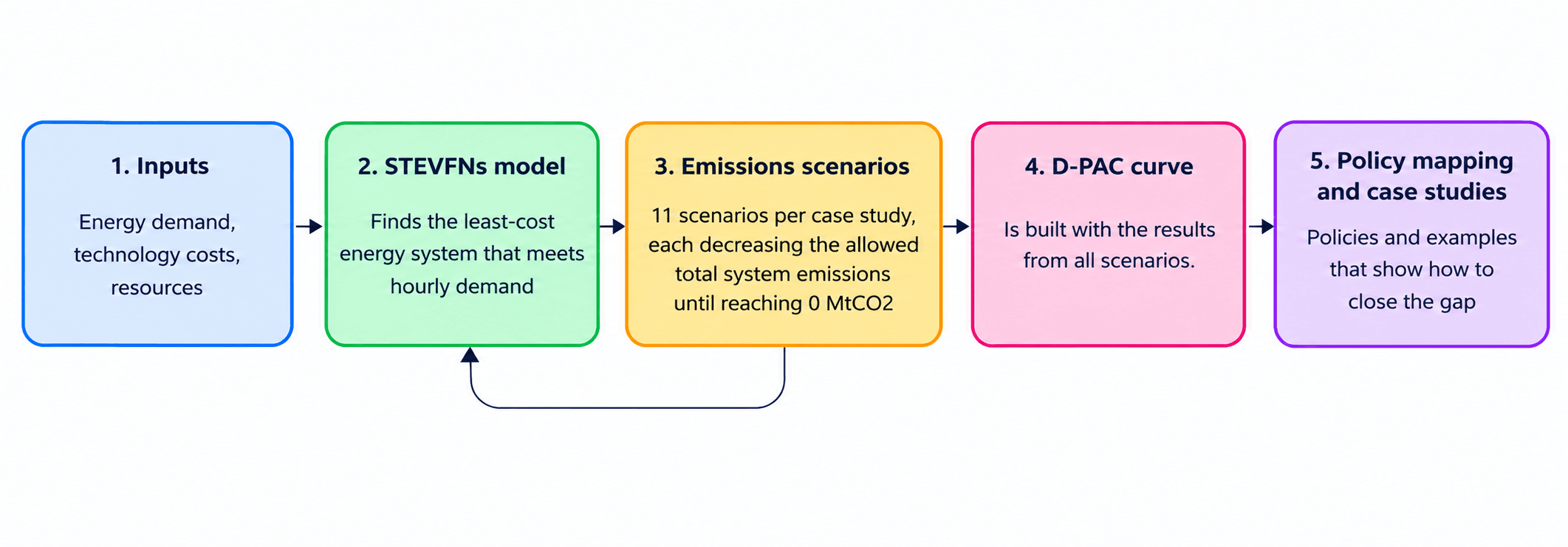
Figure 1: General overview of GMPA method flow diagram.
What is mitigation potential?
The concept of “mitigation potential” has been developed to assess the quantity of net greenhouse gas emission reductions that can be achieved by a given mitigation option relative to specified emission baselines.1 For the purpose of the GMPA pilot, we apply the definitions provided in the Sixth Assessment Report of the Intergovernmental Panel on Climate Change. Figure 2 shows these potentials at the global scale. The definitions below it are nested: each one is a subset of the one before it.
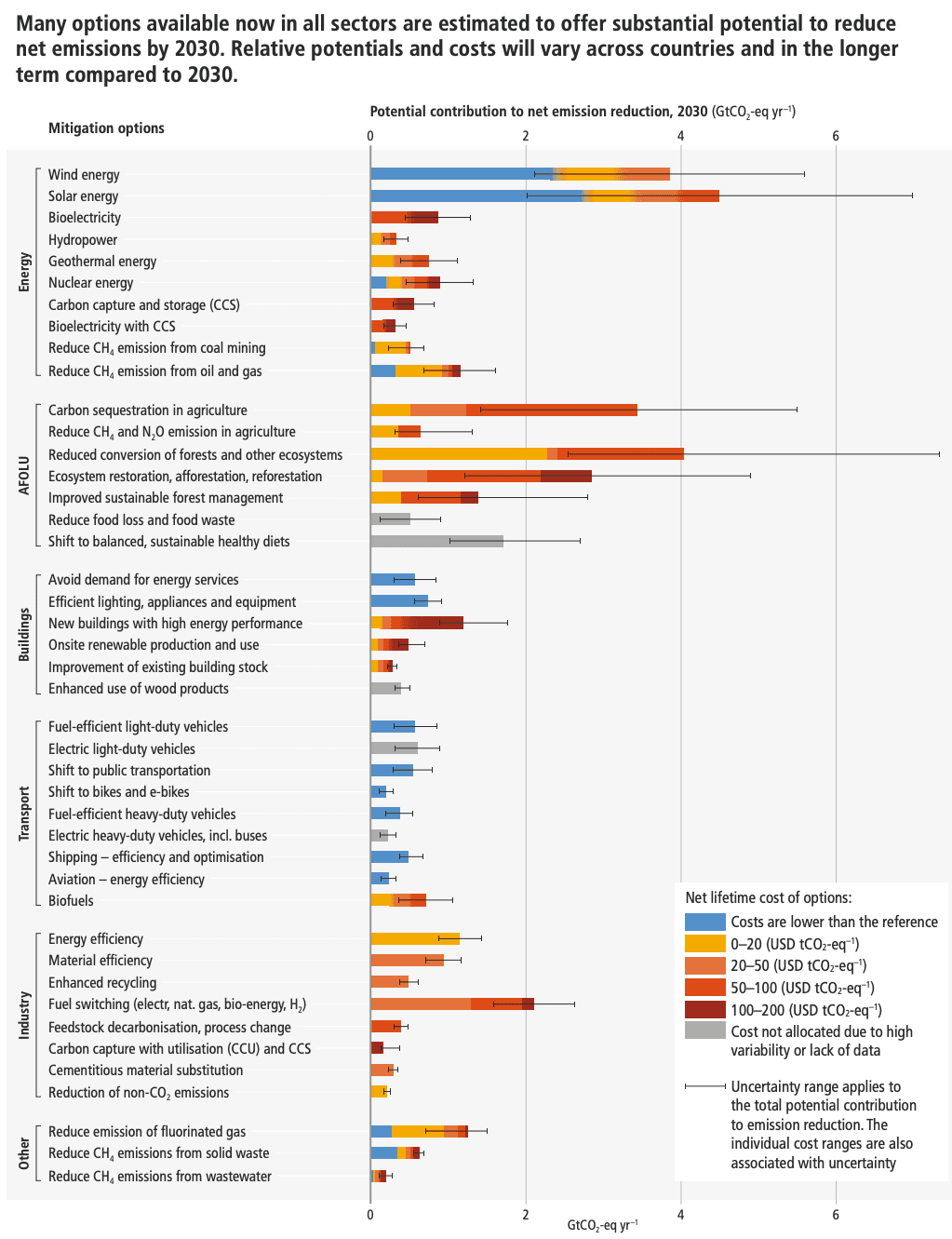
Figure 2: Overview of mitigation options and their estimated ranges of costs and potentials in 2030 at the global scale. Figure SPM.7 from IPCC (2022) "Mitigation of Climate Change" Working Group III Contribution to the Sixth Assessment Report of the Intergovernmental Panel on Climate Change.
Biogeophysical potential
The mitigation potential constrained by biological, geophysical and geochemical limits and thermodynamics, without taking into account technical, social, economic and/or environmental considerations.
Technical potential
The mitigation potential constrained by biogeophysical limits as well as availability of technologies and practices. Quantification of technical potentials takes into account primarily technical considerations, but social, economic and/or environmental considerations are occasionally also included, if these represent strong barriers for the deployment of an option.
Economic potential
The portion of the technical potential for which the social benefits exceed the social costs, taking into account a social discount rate and the value of externalities.
What the GMPA calculates
Data collection and modeling in the pilot phase focused on defining Technical potentials at specific cost levels, accounting for capital and operational & maintenance cost. This modifies the IPCC definition, which is not cost-based, because cost levels are used to show how mitigation potential changes as costs rise. Costs in the modelling include capital and operation and maintenance (O&M) costs.
Biogeophysical potentials were collected and calculated first and provide input to the modeling of Technical potentials. Economic potentials follow from the full scope of Technical potentials by identifying the point where benefits balance costs. While this project focuses on national potentials and potentials from collaboration between nations, the IPCC figure (Figure 2) illustrates at a global scale that for wind and solar energy in particular, large emissions reductions can be achieved at net zero cost.
The modelling focuses on national potentials and on collaboration potentials, i.e., the additional reduction a group of countries can achieve by trading energy (such as electricity and ammonia) compared with acting alone. How collaboration is modelled is explained in the section “National and International Collaboration Modelling (STEVFNs)”.